Collaboration with Jenny Goldstein (Dept Global Development, Cornell), and Adi Gajigan (ACSF Postdoctoral Fellow)
Macroalgae (seaweed) production comprises over half of the global total of marine and coastal aquaculture
by volume (Chopin and Tacon 2021). Beyond its existing ubiquity in edible and non-edible commercial
products, many scientists, policymakers, and investment firms have touted seaweed’s potential to play a
significant role in the transition to a low-carbon economy (Alleway 2023; Farghali et al. 2022; Greene
2022; Nagula et al. 2022). Life Cycle Assessments of the net effects of such products on GHG emissions
are scarce but there are indications that seaweed can be converted into many different types of additional
products, some of which can sequester carbon directly (e.g. building materials), some of which may reduce
GHG emissions by substituting for fossil fuel-based products (e.g. biofuels, bioplastics), and some of which
may be able to directly suppress GHG emissions (e.g. cattle feed supplements, soil amendments for rice
paddies) (Fujita et al. 2023; Lomartire et al. 2022). We call all these seaweed products together
“regenerative products” as shorthand. Existing research has thus established why expanded use of
regenerative seaweed products is necessary and urgent, however, there is little research on how this
transition can and will occur within a broader political-economic, environmental, and social context. No
one is yet sure, however, which pathways towards scaling up regenerative products yield the greatest
climate mitigation benefit, in addition to having benefits for communities that depend on seaweed
aquaculture. Our overarching research question thus asks: what are the barriers to scaling up many or all
these regenerative products and how can these barriers be addressed?
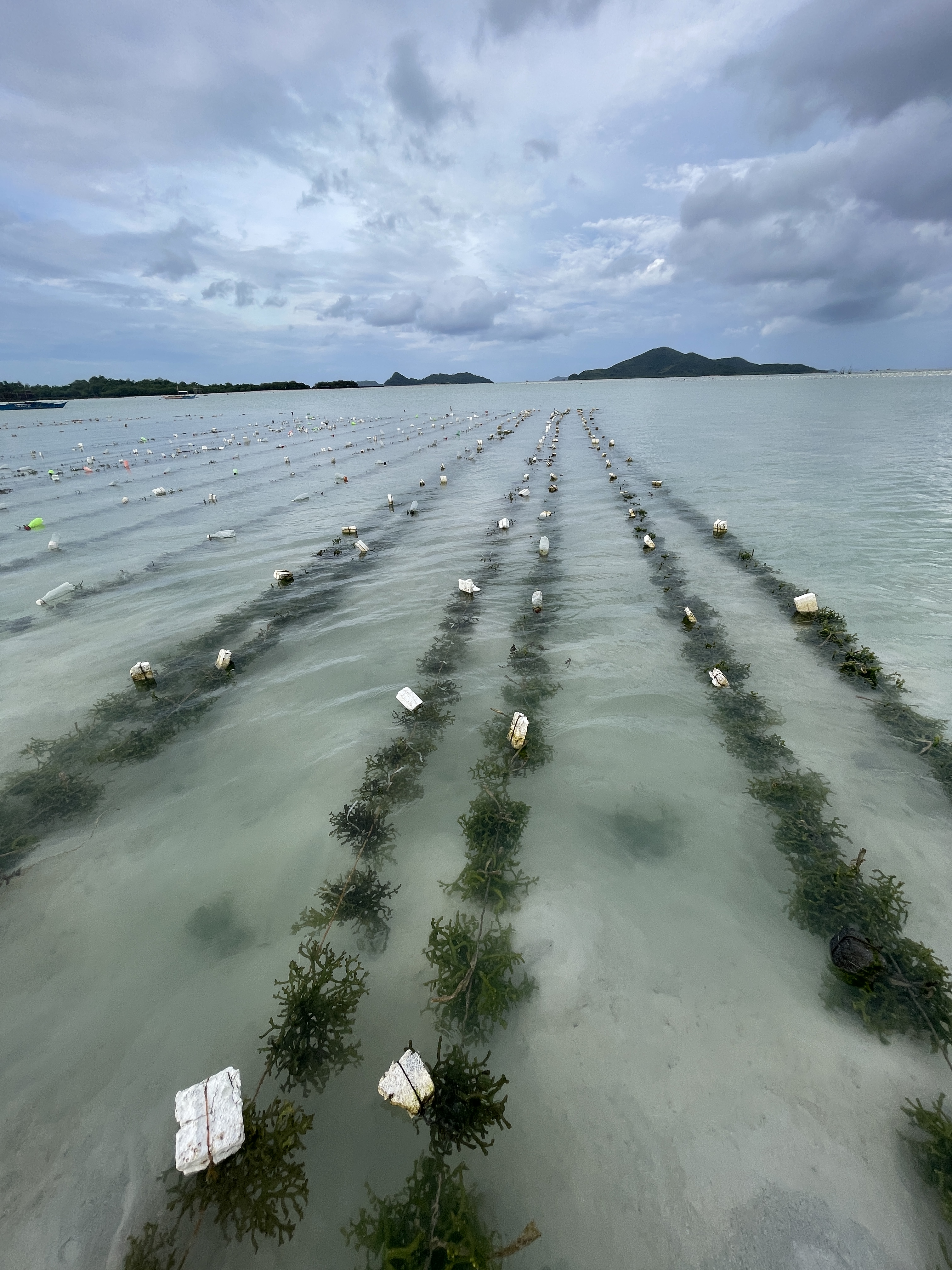
With an immense coastline suitable for aquaculture, Indonesia and the Philippines are the world’s
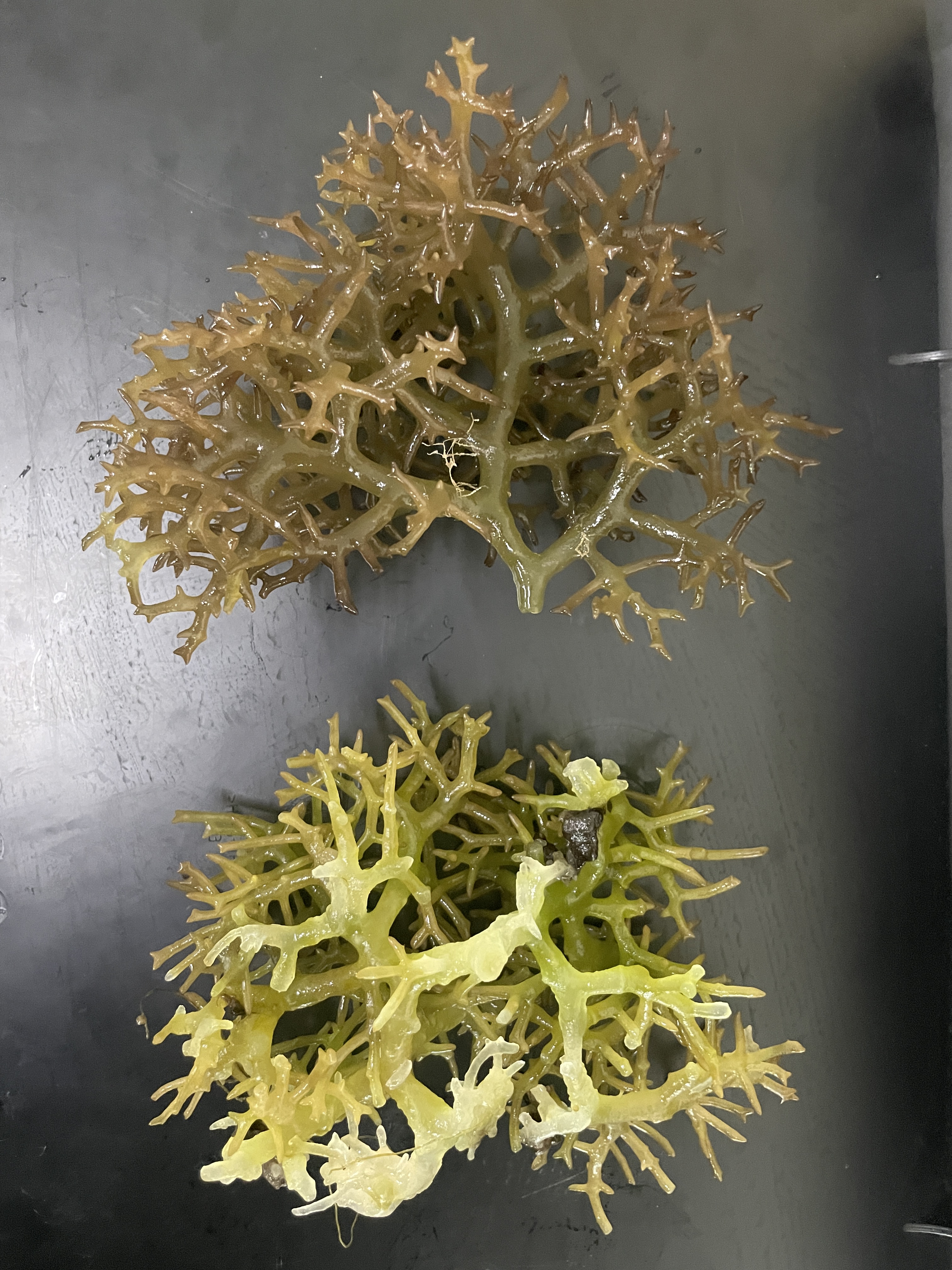
largest tropical producers of macroalgae through aquaculture cultivation. Most production is of red
seaweeds (Eucheuma and Kappaphycus) for gelling agents and extracts derived from carrageenan and used
in processed foods, cosmetics, and biomedical and industrial products. Seaweed farming needs little capital
and material input; the industries in Indonesia and the Philippines are thus dominated by smallholders,
many of whom are female, who work on flexible schedules that follow the cyclical tidal cycles (Larson et
al. 2021; Mariño et al. 2019). There is evidence that carrageenan content in macroalgae is decreasing at a
rate of 1% per year, however, and that the biomass leftover after carrageenan extraction is discarded despite
its potential use for biofuel (Álavarez-Viñas et al. 2019, Rimmer et al. 2021). This raises several significant
questions: why are seaweed farmers not selling into higher value markets for pharmaceuticals and bioactive
compounds, and why are products with low monetary value but high climate mitigation value not scaling
up? To date, there is little to no published research that addresses the multi-scalar socio-political and
environmental dimensions of regenerative products made from seaweed in Southeast Asia. As such, this
project will fill an empirical gap while also contributing to ongoing conceptual knowledge of governance of
climate technologies. Most existing research has focused on two explanations to this problem: the high
costs and low profitability of seaweed production vis-a-vis fossil fuels and the technological obstacles to
high-efficiency algae-derived biofuels. We hypothesize that in addition to technological challenges, there
are key political-economic, social, and ecological obstacles that have not been sufficiently understood.
These include but are not limited to: microbial disease outbreaks in marine ecosystems; national subsidies
for existing fossil fuel and palm oil-based products; few incentives for capital investment in seaweed
aquaculture; and local obstacles to expanding yield and processing methods. Understanding these dynamics
are key to removing roadblocks and scaling production of regenerative seaweed products for a post-fossil
fuel world.
Objectives and methods
a) Determine the political-economic barriers to expanded production of regenerative seaweed
products in Southeast Asia and identify possible solutions to remove or reduce these barriers
b) Understand drivers of microbial diseases impacting macroalgae and examine how human
activities influence these drivers
Funded by the Atkinson Center for Sustainable Futures at Cornell University